• Request Info
  • Visit
  • Apply
  • Give
  • Request Info
  • Visit
  • Apply
  • Give

Search

  • A-Z Index
  • Map

Sociology

  • About
    • Our Vision
    • Contact
    • Offices
    • Newsletter
    • Links
    • News
    • Initiatives
    • Center for Social Theory
  • Undergraduate Students
    • Programs
    • Declare Major
    • Major Requirements
    • Minor Requirements
    • Scholarships
    • Advising
    • Course Descriptions
  • Graduate Students
    • Frequently Asked Questions
    • Graduate Student Awards
    • Benchmarks
    • Graduate Handbooks
  • People
    • Faculty
    • Affiliated
    • Emeritus
    • Staff
    • Graduate Students
    • Distinguished Alumni
    • Recent Books
  • Sociology Programs
    • M.A. in Sociology
    • Ph.D. in Sociology
    • Certificates
    • Areas of Specialization
  • Social Theory Certificate
Home » Archives for Kaitlin Coyle
Author: Kaitlin Coyle
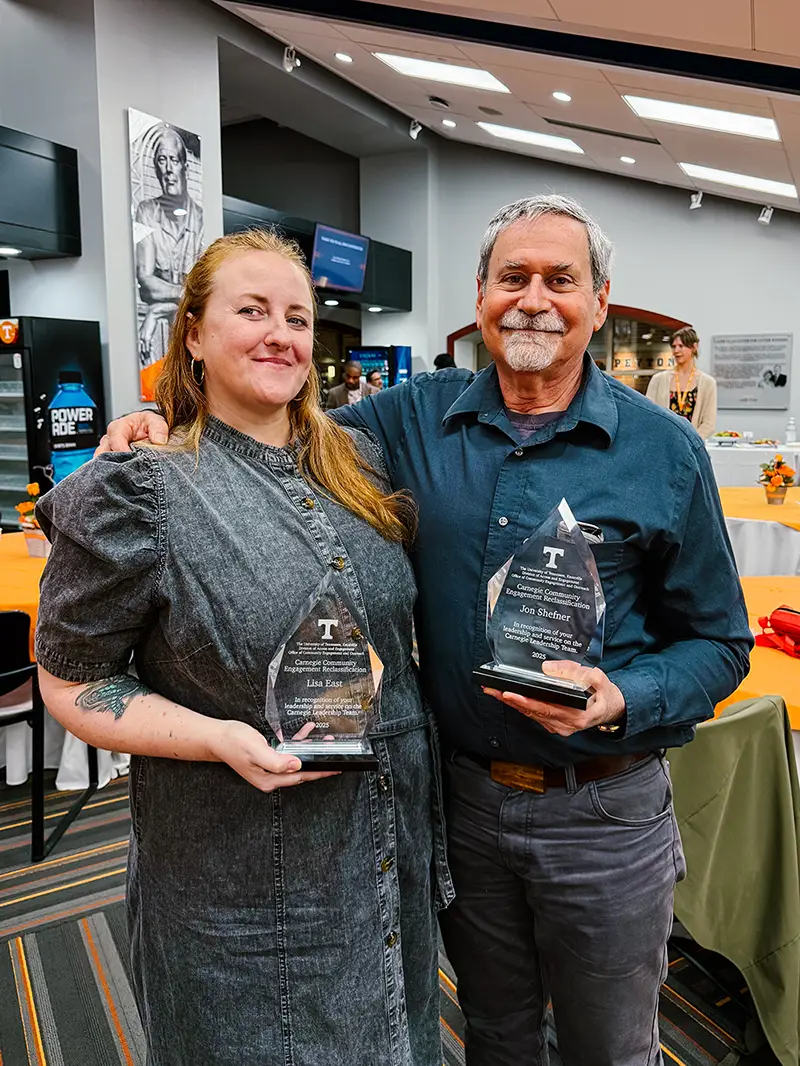
Lisa East and Jon Shefner hold awards.

Follow Our Faculty Members’ Achievements

December 11, 2025 by Kaitlin Coyle

Our faculty have had an extraordinary year filled with achievements, publications, and new leadership roles. 

Assistant Professor Andrew Kim was elected to the Board of the Southern Demographic Association and accepted into the Public Scholarship Academy at Emory University, a highly competitive program that will expand his skills in public engagement. 

Associate Professor Michelle Christian released her new book, The Global Journey of Racism (Stanford University Press), and co-authored “My Gender Can Get Me Paid If I So Choose: The Processes of Transgender and Non-Binary Labor Commodification and Embodied Work” in Critical Sociology with Assistant Professor Christopher Rogers.

Shaneda Destine celebrated multiple milestones, earning tenure and promotion to associate professor of sociology and Africana studies, being elected secretary treasurer of the American Sociological Association Section on Racial and Ethnic Minorities, and joining the College of Arts and Sciences Teaching Council as the social sciences representative through 2028. 

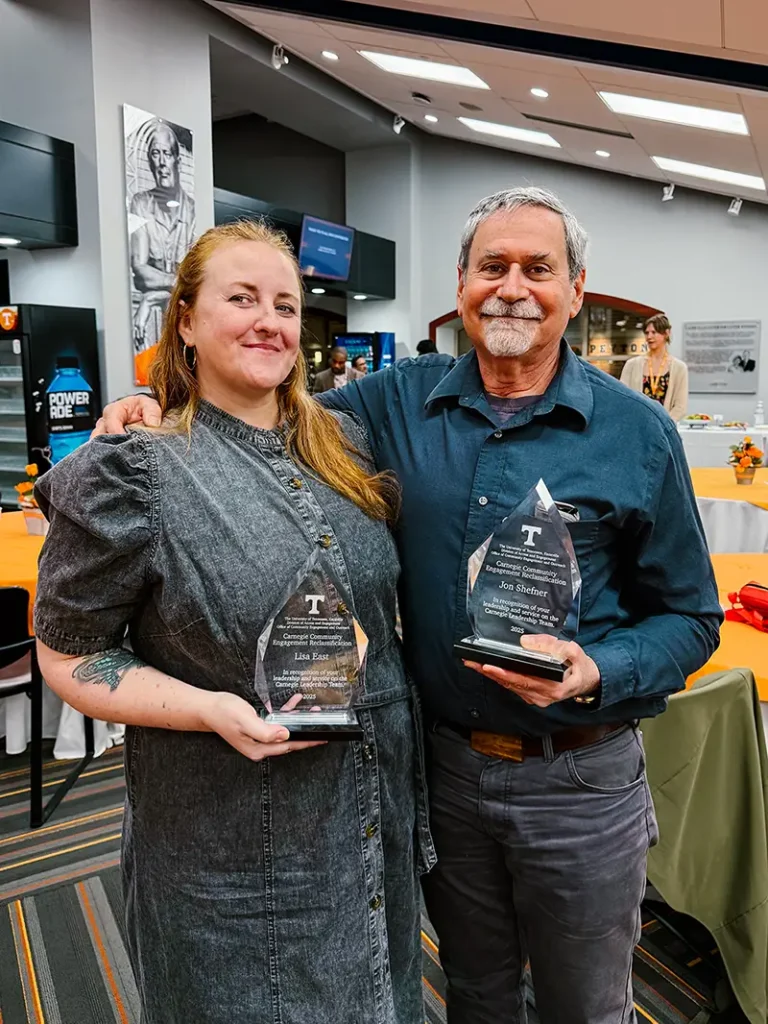
Lisa East and Jon Shefner hold awards.
Teaching Associate Professor Lisa East (left) and Professor Jon Shefner (right) hold their Carnegie Community Engagement reclassification awards.

Meanwhile, Meghan Conley was promoted to associate professor of practice and received Summer Faculty Research Assistants Funding (FRAF) for 2025, and Steve McGlamery was promoted to teaching associate professor. 

Assistant Professor Sam Kendrick was selected by the Alan Alda Center for Communicating Science for its prestigious Signature Program, and Professor Stephanie Bohon was named an SEC Academic Leadership Development Fellow.

Building on this tradition of rigorous inquiry, Professor Asafa Jalata continues to make remarkable scholarly contributions on global liberation movements, race, and indigenous sovereignty. His recent works include The Quest for Democracy, Self-Determination, and Just Peace in Oromia and Ethiopia (Cambridge Scholars Publishing, 2025) and the article “The Oromo Liberation Front and Its Long Journey: Achievements, Challenges, and Resilience” in Humanity & Society (2025). His extensive record of publications, invited talks, and edited volumes underscores his role as a leading voice in critical global studies and Oromo scholarship.

Community-engaged scholarship was also in the spotlight. Professor Jon Shefner and Teaching Associate Professor Lisa East completed their leadership service on the Carnegie Community Engagement Reclassification process, which will secure UT the highest classification for community engagement. Their efforts were supported by graduate research associates Beth Holden and Zaina Shams and recognized at a university-wide leadership ceremony.

Our faculty continue to advance their research in exciting ways. Associate Professor Tim Gill completed 100 interviews and ethnographic research with working-class Clevelanders and signed a book contract with Bloomsbury Publishing for a manuscript on politics, corruption, and the Mafia in Cleveland, due in 2026. 

Professor Michelle Brown continues to shape the field through her leadership as co-director of the Appalachian Justice Research Center (AJRC), which has already secured over $1.1 million in grants and currently guides 12 active research initiatives. She co-authored Under the Gun (Criminology Goes Back to the Movies) and continues publishing widely in outlets such as Inquest, Antipode, and the Journal of Law and Political Economy. 

In addition, Deonte Hughes (MA ’22) and Associate Professor Deadric Williams have a forthcoming article in the Journal of Family Issues on poverty, religion, and Black mothers’ parent-child relationships.
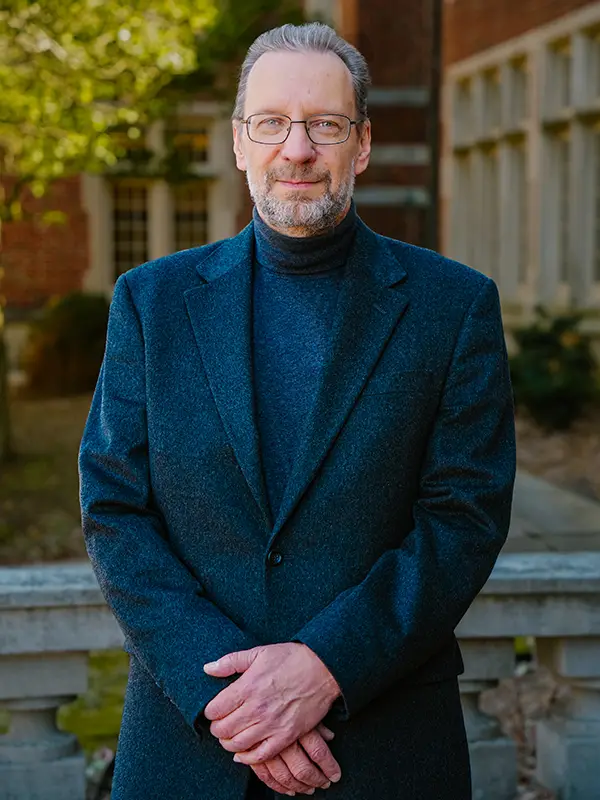
Our nontenure-track and pro-track faculty have also been producing impactful scholarship and community work. 

Teaching Assistant Professor Anthony J. (AJ) Knowles published Driving Productivity: Automation, Labor, and Industrial Development in the United States and Germany (2025). Teaching Assistant Professor Vivian Swayne, a Human Sexuality Fellow with the California Institute for Integral Studies, published in Feminist Formations and contributed a chapter to the forthcoming Handbook on State Criminality. She also co-authored with Professor Michelle Brown in Appalachian Journal and co-directs the participatory digital archive Abolition Now: Images for Study and Struggle, documenting over 1,000 works of abolitionist art from the Black Lives Matter era. 

Lecturer Sarah D’Onofrio continues her critical research on the political economy of biogas production, helping communities across the US challenge harmful anaerobic digester projects. Her collaboration with Farm Forward produced a widely cited report exposing how major industrial farms exploit “green” subsidies despite long histories of environmental violations.

Together, our faculty demonstrate the Department of Sociology’s deep commitment to scholarship, public engagement, and community justice.

Filed Under: Newsletter

Assistant Professor Sam Kendrick.

Kendrick Examines COVID Disruptions to Dating

December 11, 2025 by Kaitlin Coyle

Assistant Professor Sam Kendrick.

With research into courtship and new courses on sexualities and gender, Assistant Professor Sam Kendrick offers insights into culture.

Assistant Professor Sam Kendrick is making an immediate impact in the Department of Sociology through innovative teaching and groundbreaking research on gender, intimacy, and social change.

This academic year, Kendrick launched two new gender-focused courses—an undergraduate course on Sexualities and the department’s first graduate seminar on the Sociology of Gender. These courses fill a crucial gap in the curriculum, offering students at all levels new opportunities to critically engage with questions of gender, sexuality, and inequality. Both courses have been met with enthusiastic response from students, and Kendrick hopes to add them permanently to the department’s catalog.

Kendrick’s current book project, Love in the Time of COVID: The Pandemic’s Unsettling of Gendered Dating, explores how the COVID-19 pandemic disrupted US dating culture and reshaped gender power dynamics. 

Drawing on a longitudinal qualitative dataset of over 150 interviews with 103 participants conducted between 2020 and 2025, her work illuminates how crises can reconfigure norms of intimacy, masculinity, and femininity. Two manuscripts from this project are currently under review. One examines how the pandemic expanded women’s “strategies of empowered action” in dating, while the other explores how men navigated shifting norms—oscillating between patriarchal retrenchment and self-reflective transformation.

In addition to her book project, Kendrick co-authored a chapter with Professor Joane Nagel, “Gender, Climate Change, and the Production of Scientific Knowledge,” published in the Research Handbook on the Sociology of Knowledge (2025).

Through her teaching and research, Kendrick continues to expand the department’s engagement with critical gender studies, while offering students vital tools for understanding how culture, crisis, and inequality intersect in everyday life.

Filed Under: Newsletter

Kelly Arnold speaks during the College Arts and Sciences commencement ceremony inside Thompson-Boling Arena at Food City Center on May 18, 2024.

Graduate Degrees Awarded

December 11, 2025 by Kaitlin Coyle

Kelly Arnold speaks during the College Arts and Sciences commencement ceremony inside Thompson-Boling Arena at Food City Center on May 18, 2024.

12 students in the Department of Sociology were awarded graduate degrees.

Korleki Ashong, PhD

Dissertation title: “Unpacking Ghana’s Punitiveness: A Narrative Analysis

Rose Diaz, PhD

Dissertation title: “Whiteness, Imperialism, and Cultural Production: Unveiling U.S. Influence in Post-Dictatorial Chilean Society” 

Diego Taboada, PhD

Dissertation title: “Pentrification: Gentrification and the Carceral Geographies of Racial Capitalism”  

Álvaro Germán Torres Mora, PhD

Dissertation title:  “Cattle Ranching and Deforestation in Colombia: The Impact of Conflict, Land protection, and Uneven Development”

Lexi DeBusk, MA

Thesis title: “News Media Constructions of School Shootings in the Contemporary United States”

Sarah Cooper

Thesis title: “From Coal to Cops: Examining the Transformation of Union Solidarity into Policing in Appalachian Communities” 

Fran Gerbic, MA

Thesis title: “Nothing About Us Without Us: The Struggle for Public Education”

Chasidy Harris, MA

Thesis title: “Narratives of Fear and Resistance: LGBTQ+ Visibility and Media Power in Contemporary America”

Shaylee Hodges, MA

Thesis title: “Fallout: Galvanizing Attention Toward Slow Violence and Environmental Injustice”

Tani Islam, MA

Thesis title: “Do Environmental NGOs Matter?  Correlations between eNGO Operational Years and CO2 Emissions in U.S. Metropolitan Statistical Areas” 

Dler Awsman, MA

Thesis title: “Democracy in the Margins: The Case of Iraq as an External Critique of Liberal Democracy”

Kimmie Haliburta, MA

Thesis title: “Who Let the Dogs Out? A Study of Rural Gentrification, Roaming Dogs, and Community Conflict”

Filed Under: Newsletter

Graduate students in the Department of Sociology.

Graduate Student Achievements

December 11, 2025 by Kaitlin Coyle

Graduate students in the Department of Sociology.

Graduate students in the Department of Sociology received various awards.

Zaina Shams

Received the Dawn and Lawrence Taylor Graduate Fellowship (2025–26) and assisted with Carnegie Community Engagement Reclassification data collection.

Diego Taboado

Co-authored an award-winning Race & Class article with Kasey Henricks, recognized by American Sociological Association’s Marxist Section.

Chasidy Harris

Elected vice president of the Graduate Student Senate (2025–26) and recognized for Excellence in Service.

Sukanya Bhattacharya

Received the Dr. Wanda Rushing Sociological Research Award ($5,000) and McClure Fellowship for international research; and recognized for Excellence in Research

Bryan Clayborne

Awarded the Yates Dissertation Fellowship

Sarah Cooper

Recognized for Excellence in Teaching

Sarah Castillo

Recognized for Excellence in Service

Beth Holden

Recognized for Excellence in Service

Nadya Vera

Recognized for Excellence in Service

Filed Under: Newsletter

Cameron Graham.

From Knoxville’s Elite to International Relations

December 11, 2025 by Kaitlin Coyle

Cameron Graham.

Cameron Graham’s dissertation is examining the rise of covert, unconventional warfare among leading world powers.

Cameron Graham specializes in political economy and globalization, with a secondary focus in social theory and additional engagement in the subfield of critical criminology. 

His forthcoming publications include a co-authored chapter with Ivan Shmatko, titled “Theorizing War,” which will appear in the Oxford Handbook of Critical & Cultural Criminology edited by UT Professor Lois Presser and Professor Kevin Haggerty (December 2025). Another collaborative project, “The Knoxville Power Elite and the Urban Growth Machine,” co-written with doctoral candidate Christian Lewelling and Professor Jon Shefner, is scheduled for submission to Social Currents.

Graham’s dissertation, “Neo-Medievalism or a New Cold War? A Comparative Study of World Powers, Paramilitaries, and the Civilianization of Warfare in the Global Risk Society,” critically examines the rise of covert, unconventional, irregular, and hybrid warfare among leading world powers. 

This work advances the development of a critical sociology of war—sometimes referred to as critical military sociology—capable of addressing the complexities of global politics and the discreet practices of war-making and coercive statecraft that have shaped international relations since 1945. 

Initially focused on the phenomenon of private military and security contractors, his research expanded to incorporate Andrew Thomson’s conceptualization of para-institutional complexes, highlighting how diverse non-state and paramilitary actors—including mercenaries, contractors, ethnic militias, warlords, and organized crime groups—have been institutionalized as proxies or surrogates for state power in various forms over the past several decades. 

By situating these developments within Max Weber’s concept of the modern state’s monopoly on violence, Graham interrogates how shifts in global conflict, security, and international political economy challenge one of sociology’s most fundamental assumptions. His project also engages with ongoing debates about the future of world order, globalization, and the re-emergence of Cold War–like tensions, while scrutinizing the imperialist, neocolonial, and extra-legal practices of world powers. 

A central focus of this work is the inadequacy of international law in constraining state hierarchies and practices within these dynamics, underscoring the need for a more critical framework for understanding warfare and global risk in the contemporary era.

Graham is currently working as a lecturer at the University of Tennessee at Martin, with the potential for promotion to tenure track in the future.

Filed Under: Newsletter

Courtney Farley, graduate student.

Sustainability, Inclusion, EVs, and Unions

December 11, 2025 by Kaitlin Coyle

Courtney Farley, graduate student.

Graduate student Courtney Farley’s research is bringing an interdisciplinary perspective to studies encompassing sustainability and technological change.

Courtney Farley’s research explores the intersections of sustainability, equity, and social justice in urban and industrial contexts. 

In collaboration with Assistant Professor Aryana Soliz, she investigates how the green city movement can better integrate disability justice and care ethics into urban sustainability transitions. While green urbanism often focuses on infrastructure such as green spaces, sustainable transport, and energy systems, it has largely overlooked the experiences and knowledge of disability communities. 

Drawing from urban political ecology and critical disability studies, Farley examines who benefits—and who is excluded—in efforts to create more sustainable cities, highlighting how care practices and lived expertise within disability communities can inform more inclusive and equitable urban transformation.

In her research with Teaching Assistant Professor AJ Knowles, Farley studies the adoption of electric vehicles (EVs) globally and in the southern United States. She examines the social, political, and cultural dynamics shaping EV transitions, as well as the barriers and opportunities for achieving more equitable and sustainable outcomes. 

Additionally, she investigates how labor and industrial systems intersect with EV adoption, including how unionization efforts and technological transitions are shaping the future of auto manufacturing, workers, and production systems. 

Through this dual research focus, Farley brings a critical, interdisciplinary perspective to pressing issues at the intersection of sustainability, social justice, and technological change.

Filed Under: Newsletter

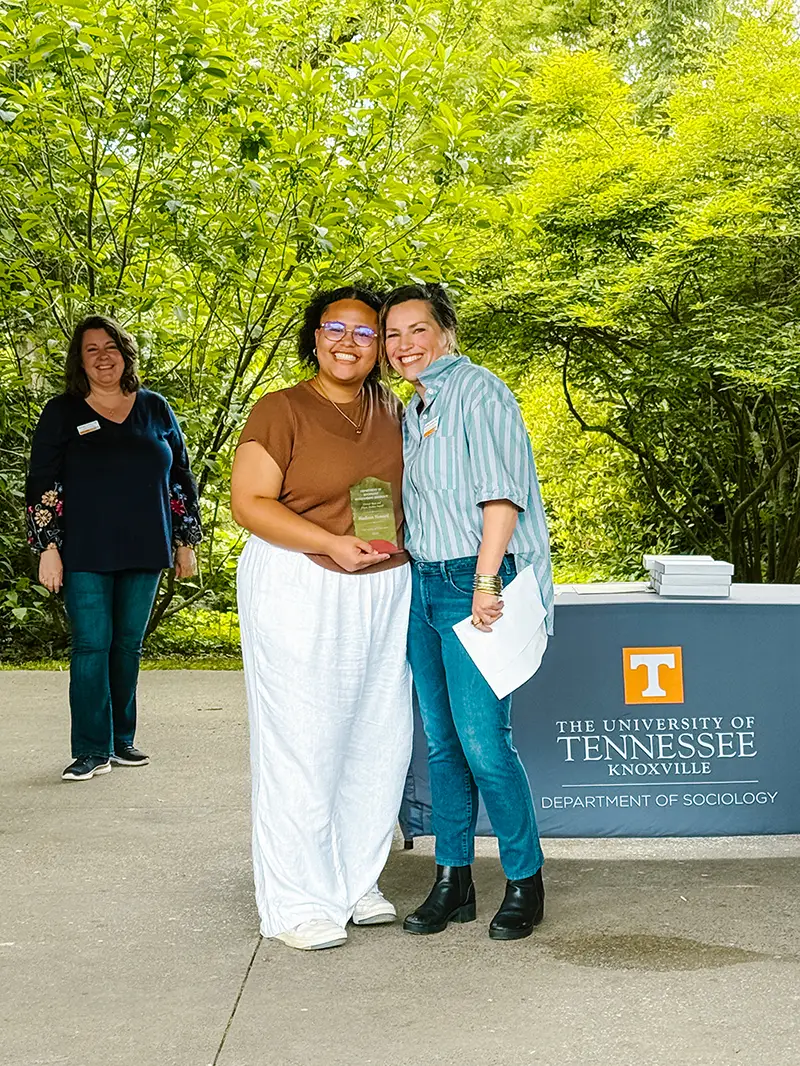
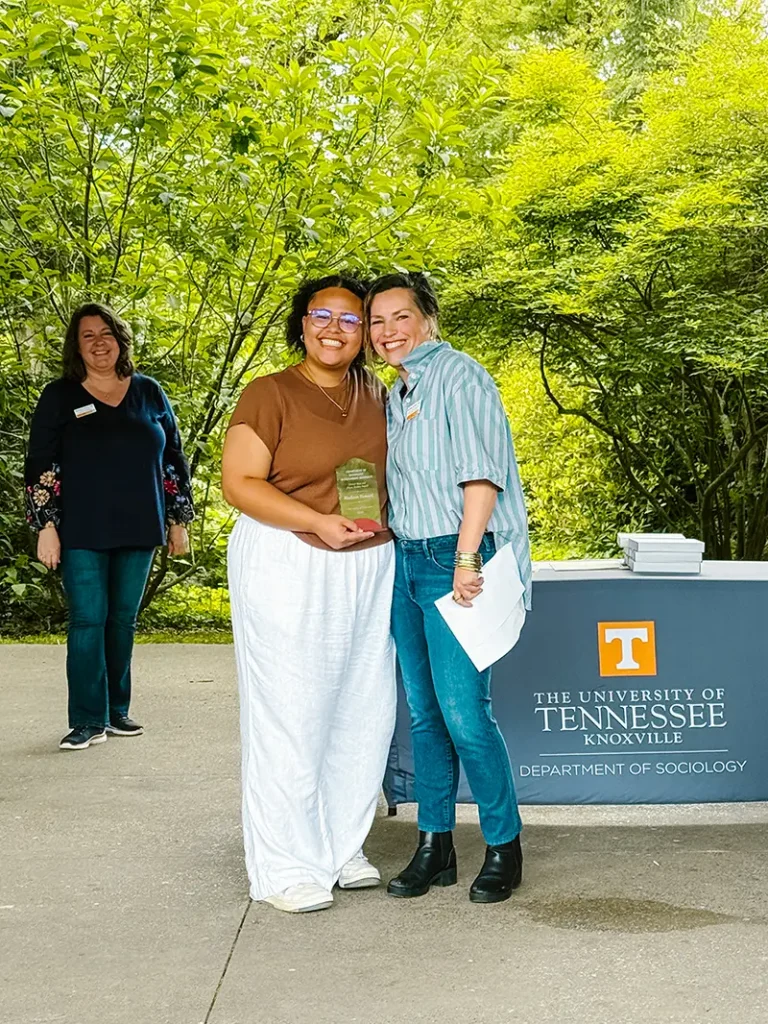
Madison Howard stands with Associate Professor and Executive Associate Head Michelle Christian as she receives an award.

Howard Finds Passion for Sociology and Her Career

December 11, 2025 by Kaitlin Coyle

Madison Howard stands with Associate Professor and Executive Associate Head Michelle Christian as she receives an award.
Madison Howard receives her Outstanding Graduate in Critical Race and Ethnic Studies award alongside Associate Professor and Executive Associate Head Michelle Christian.

Madison Howard (’25) chose to attend the University of Tennessee, Knoxville, because she wanted to go somewhere where she would grow not only as a student, but also as a leader, community member, and professional.

She changed her major to sociology after realizing she enjoyed learning about patterns of social relationships and social behavior, and she decided to minor in social justice. This year she was recognized as the Outstanding Graduate in Critical Race and Ethnic Studies.

“I liked how I could pick from multiple concentration options to tailor my education to my interests,” Howard said. “I chose my concentration because I always had an interest in global leadership and wanted to explore similar social themes with different perspectives to challenge myself academically and connect with multiple fields such as psychology and statistics.”

Howard also served as a tutor in the Judith Anderson Herbert Writing Center, which during her junior and senior years allowed her to work with students in Knox County Schools writing college admissions essays. “It was a pivotal moment in my career exploration,” she said. “The experience of working with the Writing Center team solidified my passion for working on initiatives that support students throughout their academic career, and pushed me to pursue postgraduate opportunities that contribute to making a difference in students’ lives.”

During the fall of her senior year, she also took her first course with Associate Professor Michelle Christian, who became a mentor. “She was an undying support both inside and outside the classroom,” Howard said. 

“Dr. Christian opened my eyes to the fact that pursuing a passion is always worth trying, because you never know what opportunities may lie ahead,” Howard said. “She encouraged me to tap into my ambition, and to always seek opportunities for growth, which propelled me forward through the rest of my senior year and into postgraduate life.”

With Christian’s encouragement Howard committed to starting her career in higher education and is now a strategic initiatives project coordinator with UT’s Division of Access and Engagement. 

Filed Under: Newsletter

Center for Social Theory Builds Bridges

December 11, 2025 by Kaitlin Coyle

Harry F. Dahms, Director of the Center for Social Theory.
Harry F. Dahms, Professor of Sociology and Director of Center for Social Theory

The Center for Social Theory at the University of Tennessee, Knoxville, provides a vibrant interdisciplinary hub for faculty and graduate students engaged in theoretical and cultural research. 

Founded in 2012 as the Committee on Social Theory under the leadership of Professor Harry F. Dahms in the Department of Sociology and Professor Emeritus Allen R. Dunn in the Department of English, the center has grown into a formalized space that fosters collaboration across the humanities, social sciences, and beyond.

This year Dahms—who celebrated 20 years of service at UT—continues to shape the field of social theory through his visionary leadership. As founder and director of the center, he has cultivated an intellectual space that brings together scholars across disciplines to examine the foundations of modernity, power, and governance while connecting UT’s academic community to conversations shaping the future of social thought worldwide.

At its core, the center is dedicated to creating opportunities for dialogue, exchange, and innovation. It hosts lectures, conferences, workshops, and panel discussions, as well as providing a platform for presenting works in progress. In addition, the center offers a graduate certificate in social theory, supporting students who want to deepen their engagement with theoretical frameworks across disciplines. 

Its activities emphasize not only the advancement of theory but also the application of theoretical insights to pressing social, political, and cultural issues.

The center draws active participation from departments across the College of Arts and Sciences, including sociology, English, philosophy, history, anthropology, political science, and geography. It also actively acknowledges and engages developments in the natural and applied sciences, ensuring that its work remains relevant to broader questions about knowledge, society, and human futures. 

The center’s programming is organized around several thematic areas: modernity and American society, power and governance, film, literature, media, technology and society, and universities and higher education. Future projects include the launch of an online journal dedicated to showcasing interdisciplinary, theory-driven research.

The Center for Social Theory exemplifies UT’s commitment to breaking down disciplinary silos and cultivating spaces where scholars and students can confront complex problems together. It stands as a model for how universities can leverage theory to build stronger connections between academic research and the challenges of contemporary society.

Filed Under: Newsletter

Megan Conley works with a group of students from the Justice Studies certificate program. They are outside on UT's campus.

Justice Studies Graduate Certificate Expands Horizons

December 10, 2025 by Kaitlin Coyle

Megan Conley works with a group of students from the Justice Studies certificate program. They are outside on UT's campus.

Associate Professor of Practice, Meghan Conley, works with students earning a new Justice Studies Graduate Certificate.

A new Justice Studies Graduate Certificate provides students with interdisciplinary training in the study of justice, inequality, and social change. Associate Professor Tyler Wall created the certificate in collaboration with the Appalachian Justice Research Center (AJRC), ensuring a strong connection to community-based research and applied scholarship.

Students in the program gain hands-on experience through community engagement, policy analysis, and applied projects, preparing them for careers in public service, research, or advanced scholarship. The certificate is housed within the justice studies program and reflects our department’s commitment to equipping students with both theoretical knowledge and practical skills to address pressing social challenges locally, nationally, and globally.

By combining rigorous coursework with experiential learning opportunities, the Justice Studies Graduate Certificate offers a pathway for students to engage deeply with issues such as criminal justice reform, environmental justice, housing equity, and participatory community research. 

The program also strengthens collaboration across UT’s College of Arts and Sciences and with local community partners, creating a model for applied, socially engaged graduate education.


Filed Under: Newsletter

Bill McClanahan, Assistant Professor.

McClanahan is Critical Criminologist of the Year

November 14, 2025 by Kaitlin Coyle

Filed Under: Featured

  • 1
  • 2
  • Next Page »

Sociology

College of Arts and Sciences

1115 Volunteer Blvd (Suite 901)
McClung Tower
Knoxville TN 37996

Phone: 865-974-6021

The University of Tennessee, Knoxville
Knoxville, Tennessee 37996
865-974-1000

The flagship campus of the University of Tennessee System and partner in the Tennessee Transfer Pathway.

ADA Privacy Safety Title IX