Center for Social Theory Builds Bridges
The Center for Social Theory at the University of Tennessee, Knoxville, provides a vibrant interdisciplinary hub for faculty and graduate students engaged in theoretical and cultural research.
Founded in 2012 as the Committee on Social Theory under the leadership of Professor Harry F. Dahms in the Department of Sociology and Professor Emeritus Allen R. Dunn in the Department of English, the center has grown into a formalized space that fosters collaboration across the humanities, social sciences, and beyond.
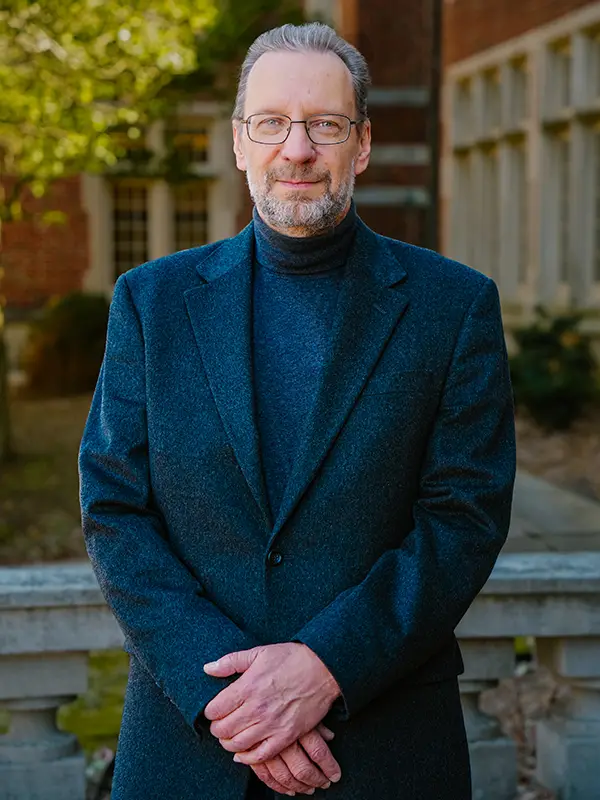
This year Dahms—who celebrated 20 years of service at UT—continues to shape the field of social theory through his visionary leadership. As founder and director of the center, he has cultivated an intellectual space that brings together scholars across disciplines to examine the foundations of modernity, power, and governance while connecting UT’s academic community to conversations shaping the future of social thought worldwide.
At its core, the center is dedicated to creating opportunities for dialogue, exchange, and innovation. It hosts lectures, conferences, workshops, and panel discussions, as well as providing a platform for presenting works in progress. In addition, the center offers a graduate certificate in social theory, supporting students who want to deepen their engagement with theoretical frameworks across disciplines.
Its activities emphasize not only the advancement of theory but also the application of theoretical insights to pressing social, political, and cultural issues.
The center draws active participation from departments across the College of Arts and Sciences, including sociology, English, philosophy, history, anthropology, political science, and geography. It also actively acknowledges and engages developments in the natural and applied sciences, ensuring that its work remains relevant to broader questions about knowledge, society, and human futures.
The center’s programming is organized around several thematic areas: modernity and American society, power and governance, film, literature, media, technology and society, and universities and higher education. Future projects include the launch of an online journal dedicated to showcasing interdisciplinary, theory-driven research.
The Center for Social Theory exemplifies UT’s commitment to breaking down disciplinary silos and cultivating spaces where scholars and students can confront complex problems together. It stands as a model for how universities can leverage theory to build stronger connections between academic research and the challenges of contemporary society.